Meaning and Cultural Dynamics in Long-Term Discourse
Multilingual and diachronic NLP for tracing long-run meaning and cultural dynamics across large-scale historical and contemporary corpora, including shifts in values and narratives.
Research at a Glance
| Topic | Data and Methods | Main Finding | Key Papers |
|---|---|---|---|
| Cultural association shifts in Chinese texts | Multi-decade Chinese printed corpora, semantic association analysis | Results do not support a simple “rising positive individualism” narrative for 1950 to 1999; some collectivist associations remain durable. | (Hamamura et al., 2021; Hamamura et al., 2022) |
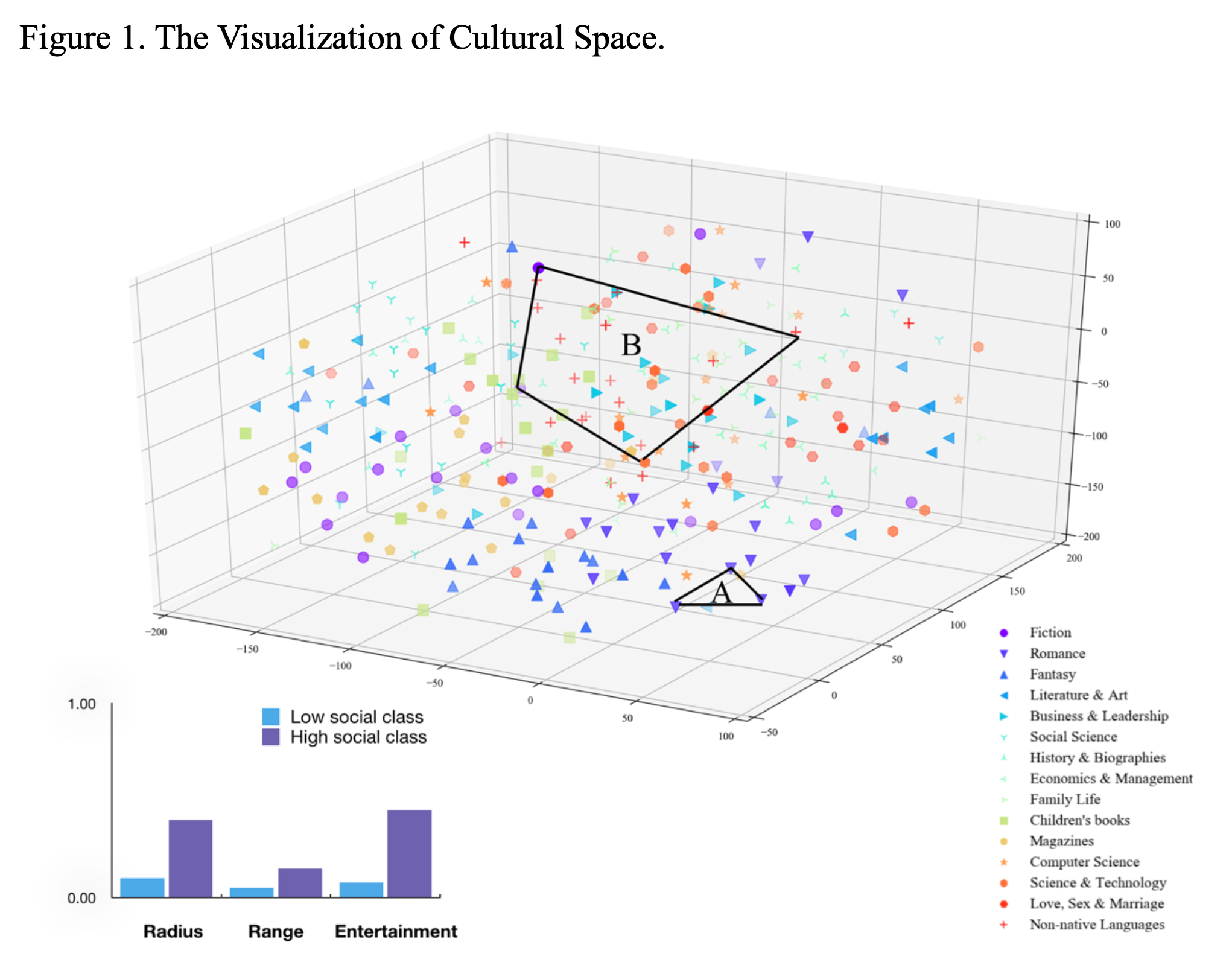
| Embedding geometry for information/cultural space | Word-embedding geometry and semantic-space modeling | Embedding-space methods provide computational tools for quantifying cocoon-like semantic structures. | (Xu et al., 2020) |
| Geopolitics in language: Sino-Japanese relations | Chinese corpora, Japanese parliamentary records, literature review | Sentiment/discourse patterns co-evolve with geopolitical context, including war-memory and maritime-dispute framing. | (Hamamura et al., 2025) |
| Historical advertising under conflict | 10,094 ads in modern Chinese newspapers, comparative modeling | Military conflict is associated with lower globalized framing in ads; market familiarity moderates the effect. | (Sun et al., 2024) |
Methods Stack
| Category | Methods |
|---|---|
| Computation | Diachronic embeddings, topic modeling, temporal semantic analysis |
| Data Engineering | Historical corpus construction, multilingual normalization |
| Inference | Longitudinal discourse comparison, multi-source triangulation |
Program Direction
- Extend diachronic modeling to more multilingual corpora and media sources across longer historical windows.
- Improve interpretability and validation of semantic change estimates through stronger triangulation with external records.
- Link long-term cultural shifts to major geopolitical and policy events using event-aligned comparative designs.