Social Sensing and Behavioral Analytics for Digital Resilience

Computational social science on platform behavior, emotion dynamics, and information vulnerability using social sensing, NLP, and panel methods.

Research at a Glance

Topic Data and Methods Main Finding Key Papers
Behavior cocoon and daily activity structure UK Time Use Survey, panel-style temporal analysis, behavioral diversity metrics Digital media use for work and leisure shows different associations with cocoon formation; work-life balance moderates the pattern. (Yan et al., 2025)
Emotion dynamics in crisis communication Four-wave social media panel data, fixed-effects modeling Negative and positive emotion show nonlinear relationships with online donation; panic and sympathy discourse act as moderators. (Zhang et al., 2025)
Partisan exposure and conspiracy beliefs US survey data, regression with interaction analysis Exposure to conservative media and far-right sites is associated with stronger COVID-19 conspiracy beliefs, with political-identity heterogeneity. (Yu et al., 2024)
Authoritarian personality and policy attitudes ANES 2020 data, mediation analysis Authoritarian personality has an indirect pathway to gun-control attitudes through partisan media exposure. (Jiang et al., 2025)
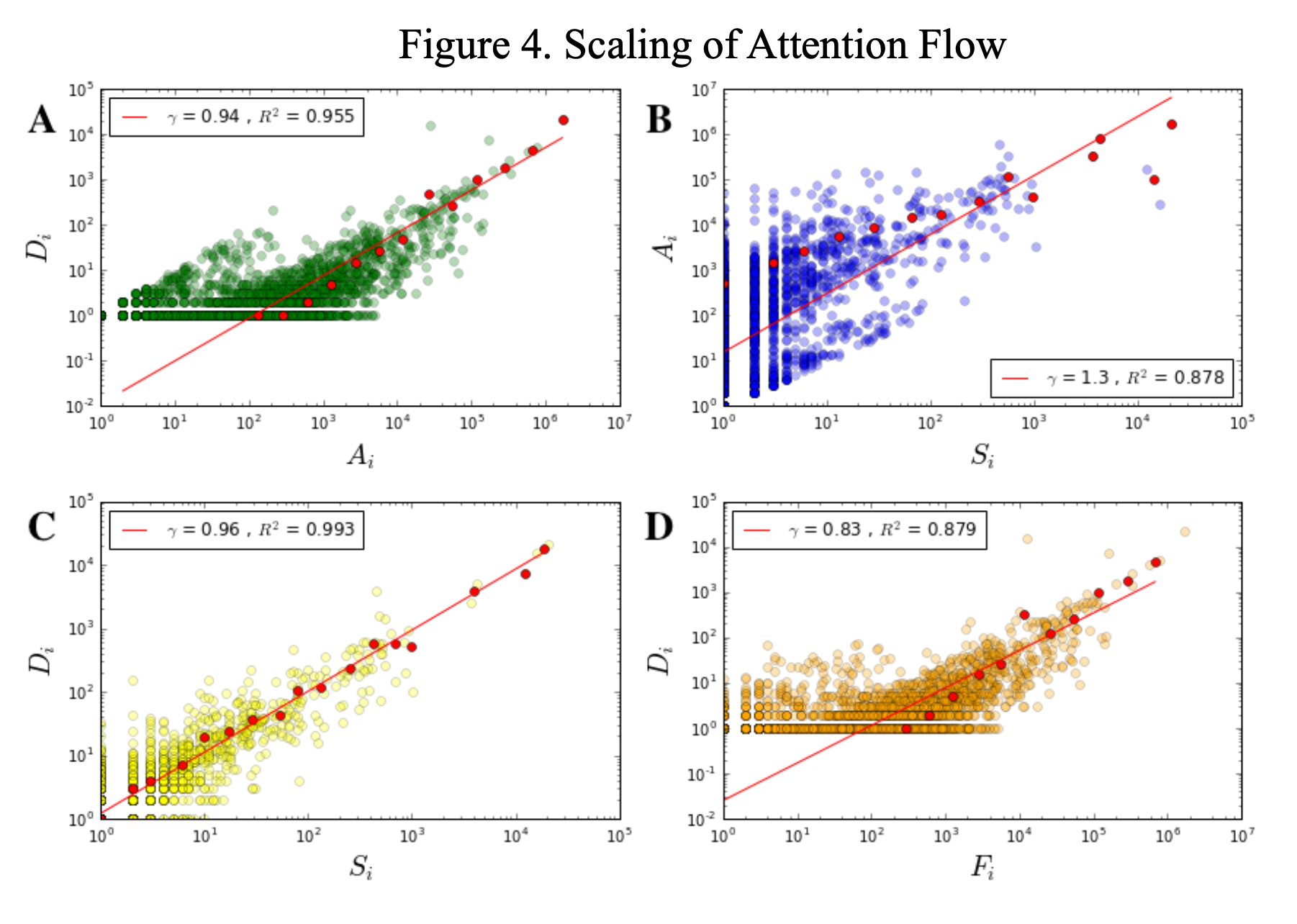
Collective attention foundations Computational communication modeling Early work on collective attention flow informs current social-sensing and exposure-pathway measurement. (Wang et al., 2017)

Methods Stack

Category Methods
Inference Fixed-effects and multilevel models, mediation designs
Computation Social sensing pipelines, NLP-based emotion and discourse measurement
Data Time-use surveys, social media panel data, national survey datasets

Program Direction

  • Build policy-relevant computational evidence on platform effects and information vulnerability.
  • Publish reusable methods in computing venues and domain findings in high-impact interdisciplinary outlets.
  • Train PhD students on end-to-end social sensing workflows and causal inference in observational settings.

References

2025

  1. Commun.
    yan2025cocoon.jpg
    Who Weaved My Behavior Cocoon? The Impact of ICT Use on Daily Behaviors in an Accelerated Society
    X. F. Yan, Zhicong Chen, L. Lu, and 1 more author
    Communications: The European Journal of Communication Research, 2025
  2. IJBC
    zhang2025emotion.jpg
    Let us not wallow in the valley of despair: The role of emotion, panic, and sympathy discourses in promoting productive actions
    Y. Zhang, Y. Sun, G. Lu, and 2 more authors
    International Journal of Business Communication, 2025
  3. JITP
    jiang2025authoritarian.jpg
    Exploring the Mediating Role of Selective Exposure to Partisan Media Between the Authoritarian Personality and Gun Control Attitudes
    X. Jiang, H. Miao, and Zhicong Chen
    Journal of Information Technology & Politics, 2025

2024

  1. Sage Open
    yu2024conspiracy.jpg
    Propagating COVID-19 Conspiracy Theories: The Influence of Right-Wing Sources
    W. Yu, Zhicong Chen, X. Meng, and 1 more author
    Sage Open, 2024

2017

  1. arXiv
    Leveraging the Flow of Collective Attention for Computational Communication Research
    C. J. Wang, Zhicong Chen, Q. Qin, and 1 more author
    arXiv preprint arXiv:1710.07761, 2017